
India’s Wine Regions and Where the Industry Grows
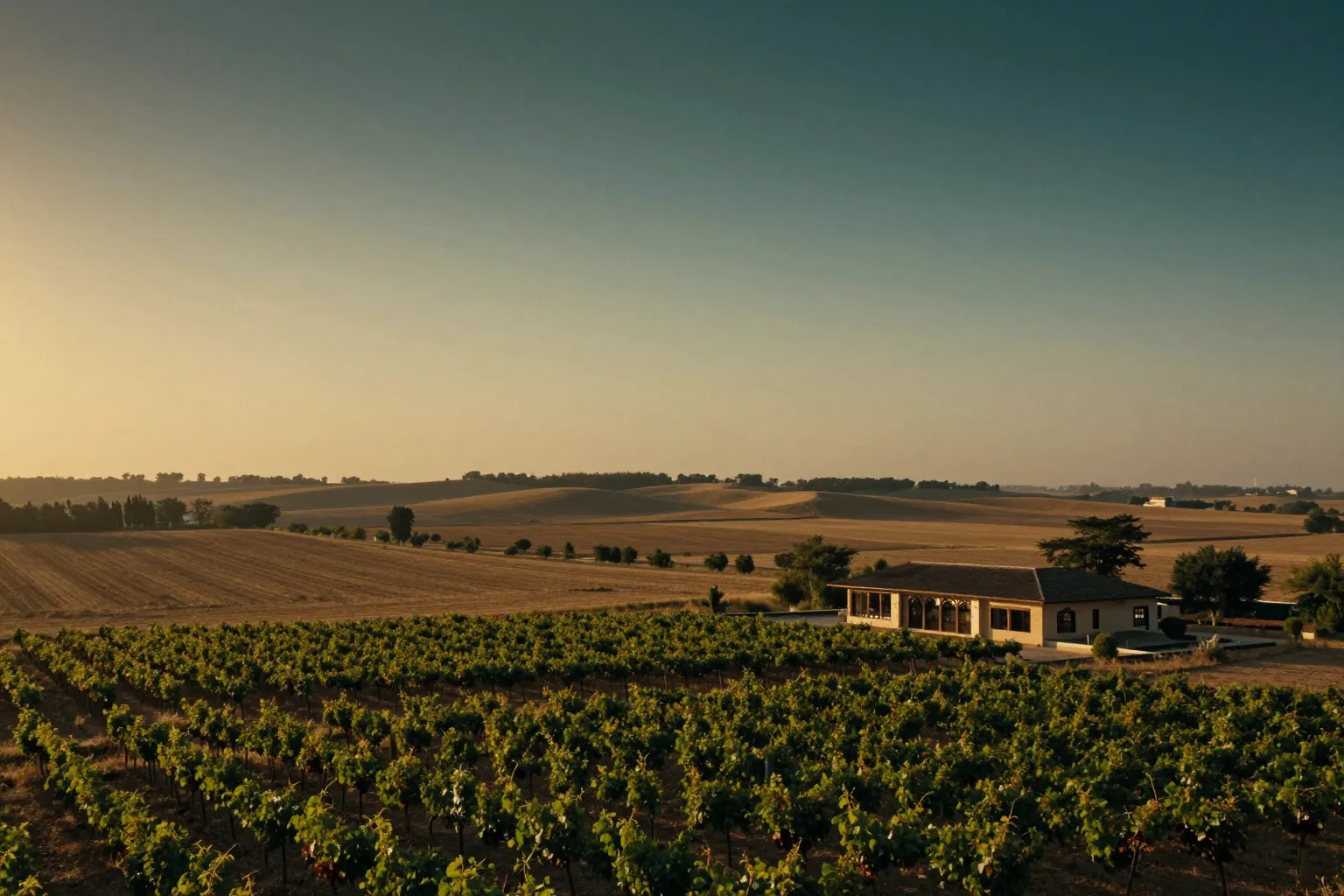
India’s wine geography is more concentrated than the country’s size suggests. Production clusters in two states, consumption clusters in a handful of cities, and the two maps barely overlap. This note walks through the producing regions first and then the places where the industry is growing today, with sources at the end.
Maharashtra and Nashik
Industry summaries put Maharashtra at about 90 per cent of Indian wine, and Nashik alone at about 80 per cent of the national total. The exact split varies by source and year, so read these as order-of-magnitude shares. Nashik district is home to roughly 45 to 52 of India’s estimated 95 wineries. The area is described as lying at roughly 610 to 730 metres, a figure consistent with general descriptions but not confirmed to the metre. The Nashik Valley holds a geographical indication for its wine, and in 2023 the district recorded more than 340,000 winery visitors, according to IMARC Group.
Elsewhere in Maharashtra, grape-growing and winemaking extend through Sangli, Solapur and Pune districts. Fratelli, India’s second-largest winemaker by most estimates, is based at Akluj in Solapur district, while Four Seasons Wines operates at Baramati in Pune district. Chateau Indage, India’s first modern winery, stood at Narayangaon in the same district before it was wound up in 2010; the wider story is in a short history of wine in India.
Inside Nashik
The district’s producers show how varied the industry has become. Vallonné Vineyards at Kavnai farms 21 acres and was founded in 2009. Reveilo, founded in 2004, brought Italian varieties to India as rootstock. Chateau d’Ori at Dindori was started by the technology entrepreneur Ranjit Dhuru, who bought 100 acres of wasteland in 2001 and planted French varieties, with first wines released around 2007. Vinsura, at the Vinchur Wine Park, began as a growers’ cooperative: three grape farmers who supplied other Nashik wineries built their own. Good Drop Wine Cellars, in the same park, runs a 50,000 square foot facility purpose-designed for sparkling wine. Chandon India, set up at Dindori by Moët Hennessy in 2013 to 2014, crushed its first Indian vintage at York Winery before its own winery opened in November 2015.
What is grown
Most Indian grapes are table or raisin varieties, led in the north by Perlette and elsewhere by Thompson Seedless and its selections. The wine grapes planted include Chenin Blanc, described as the most successful, along with Sauvignon Blanc, Viognier, Chardonnay and Riesling among whites, and Cabernet Sauvignon, Shiraz, Merlot, Zinfandel, Sangiovese, Tempranillo and Grenache among reds. By volume, Sauvignon Blanc, Chenin Blanc, Cabernet Sauvignon and Shiraz dominate, and the Cabernet-Shiraz blend is often called the classic Indian red.
Karnataka
Karnataka is second, with about 7 per cent of national output on one estimate. Its wine areas include the Nandi Hills near Bengaluru, described as lying at roughly 800 to 900 metres, along with Bijapur and the Hampi Hills. Producers on record include SDU Winery in the Nandi Valley, whose vineyard was planted in 2003 and which made its first vintage in 2012, and KRSMA Estates in the Hampi Hills, founded in 2008. KRSMA is reported to have 160 acres of which only about 50 are harvested, producing about 3,000 cases a year from iron-rich schist soils, with a first vintage in 2014. Alpine Wineries, in the Mysore and Mandya region, farms about 100 hectares.
Together, Maharashtra and Karnataka hold roughly 94 per cent of India’s grape area, according to the ICAR-NRC Grapes 2022-23 state-wise table.
Tamil Nadu, and what the north does not have
Tamil Nadu’s grape belt is the Cumbum Valley in Theni district, which produces roughly 90,000 tonnes of Muscat Hamburg and 10,000 tonnes of Thompson Seedless a year, according to company-registry and travel sources. It is described as the only Indian region where Muscat is the dominant wine grape.
North India is a different story. Himachal Pradesh is often named as an emerging wine region, and its cool climate has a real logic. But what exists there is a fruit-wine industry, based on apple, plum, peach and apricot, with a commercial producer called Minchy’s at Solan and Shoghi and a winery at the Himachal Pradesh Agricultural University at Solan that is a research and teaching facility. The research could not verify an operating commercial grape-wine estate in Himachal, and it flags many online claims about estates in the state as low-quality aggregated copy. Punjab grows grapes for the table rather than the bottle, which brings us to climate.
Three climates, one crop
ICAR-NRC Grapes describes three grape-growing climates in India. The tropical zone, covering Maharashtra, Karnataka, Andhra Pradesh and Tamil Nadu and about 94 per cent of the national grape area, relies on double pruning. Growers cut canes back after the summer harvest, then prune again around October and November so that the single quality crop ripens in the dry winter, from January to March. The mild tropical zone of south Karnataka and Tamil Nadu uses the same technique to take two crops a year, with maximum temperatures seldom above 36°C.
The sub-tropical zone is the north: Punjab, Haryana, Rajasthan, western Uttar Pradesh and Delhi, at roughly 28 to 32°N. There the vine goes dormant in winter, is pruned once in December or January, and carries one crop that ripens in early summer. Only about 90 to 95 days separate budburst from the arrival of the monsoon, which is why only the early Perlette variety reliably beats the rains. The scientific detail is in growing grapes in north-west India.
Where the industry grows today
Consumption follows cities, not vineyards. IMARC Group reports that north India holds the largest regional share of consumption, at roughly 31 per cent in 2025, and that over 65 per cent of national consumption is concentrated in Mumbai, Delhi-NCR, Bengaluru, Goa and Pune combined. Goa is singled out for the highest per-capita consumption. These are market-research estimates without disclosed methodology, so the direction is firmer than any single percentage.
The same source reports that off-trade (shops, supermarkets and e-commerce) is about 63 per cent of the market in 2025 and on-trade (restaurants, bars and hotels) about 37 per cent, a reversal from 2019, when on-premise consumption was just over 70 per cent. Exports are roughly 10 to 15 per cent of Indian output, with the UAE, the Netherlands and Hong Kong taking about 49 per cent of that, according to one marketing consultancy. In the United Kingdom, a specialist agency launched in 2021 to represent Indian producers, and one major supermarket has listed an Indian wine.
Rules shape all of this. Every state and union territory sets its own excise duties, licence fees and brand-registration requirements, and moving stock between states typically involves an import fee and an export pass fee. Tamil Nadu and Kerala run government-controlled retail. Alcohol is prohibited in Bihar (since April 2016), in Gujarat (since 1960, with a narrow carve-out at GIFT City), and in Mizoram and Nagaland. Bihar and Gujarat alone have a combined population above 190 million. The tax wrapper can raise the shelf price of an identical bottle substantially from one state to the next, which is one reason the industry remains a patchwork of local markets.
Pal Vineyards is rooted in Punjab, a state that sits outside the main producing belts described here. Its first collection, Malwa, opens in February 2028 by allocation.
Sources
- ICAR-NRC Grapes (Pune), state-wise grape area and production, 2022-23. https://www.nrcgrapes.in/State-wise-grape-area-and-production%2026.09.2024.htm
- Pal Vineyards research note, Indian Grapes & Wine Industry (updated 2026-06-11, fact-check update 2026-06-30), covering regions, climate zones and double pruning. The 90, 80 and 7 per cent shares and the altitude bands are flagged there as medium confidence.
- Indian wine, Wikipedia. https://en.wikipedia.org/wiki/Indian_wine; and Wikipedia, Nashik valley wine.
- Pal Vineyards research note, Indian Wineries: Complete Directory (2026) (updated 2026-07-28), citing Thrillophilia (Nashik vineyards), Seth Associates (exports), Wikipedia (Fratelli Vineyards; Four Seasons Wines; Cumbum Valley), Tofler and ZaubaCorp (Cumbum Valley Winery), World's Best Vineyards and Sommelier India (KRSMA), SDU Winery, Karnataka Tourism (Alpine Wineries), The Buyer and The Drinks Business (Wines in India, 2021) and Drinks Retailing and Harpers (Waitrose).
- IMARC Group, India Wine Market (regional and city concentration; on-trade and off-trade split; Nashik visitors, 2023). https://www.imarcgroup.com/india-wine-market
- Pal Vineyards research note, Indian Wine Market: Size, Growth & Consumption (2026) (updated 2026-09-07), citing Ambrosia India (2019 on-premise share), The Somm Pour and BW Legal World (excise fragmentation), The Drinks Business, “A state-by-state guide to liquor laws in India” (May 2024), Alcohol prohibition in India (Wikipedia) and LiquorsPrice (state differences).